
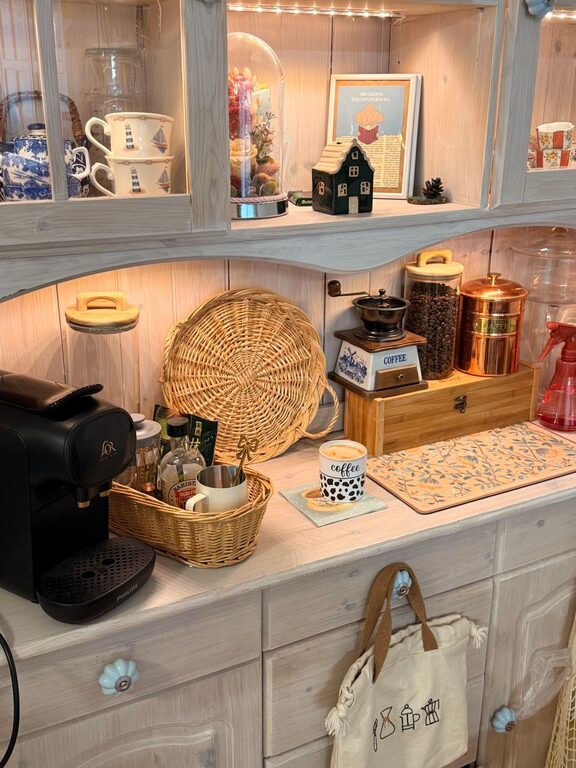
A dedicated coffee station can make your morning routine easier, more organized, and more enjoyable. Whether you prefer drip coffee, espresso, French press, or tea, a small beverage area gives everything a clear place and keeps your main kitchen counter less crowded.
You do not need a large kitchen or an expensive setup. With a suitable location, a few essential tools, and smart storage, you can create a coffee station that fits your space and daily habits.
Choose the Right Location
Start by choosing a convenient place for your coffee station. The best location depends on how you use your kitchen and where the necessary supplies are available.
Consider these options:
– A section of the kitchen counter
– A small rolling cart
– A sideboard or buffet
– A pantry shelf
– A breakfast nook
– A dedicated cabinet with a counter area
Place the station near an electrical outlet if you use a coffee maker, espresso machine, grinder, or electric kettle. It is also helpful to keep it near a water source, although you can refill a removable reservoir at the sink.
Make sure the area has enough room for your main appliance and space to prepare a drink. A crowded station can be frustrating, so measure the available surface before buying accessories or equipment.
Decide What Your Coffee Station Needs
The ideal coffee station is based on your habits, not on how many products you can fit on a shelf. Start with the drinks you make most often and choose equipment that supports them.
Basic Equipment
A simple coffee station may include:
– Coffee maker or pour-over setup
– Coffee grinder, if you use whole beans
– Electric kettle
– Coffee mugs
– Measuring spoon or coffee scoop
– Storage container for coffee
– Sugar, honey, or other sweeteners
– Milk, creamer, or dairy-free alternatives
– Stirring spoons
– Napkins or small cloths
You do not need every item on this list. For example, someone who uses a pod coffee maker may only need the machine, pods, mugs, and a small container for sweeteners.
If you enjoy several brewing methods, avoid placing all of your equipment on the counter. Keep less frequently used items in a nearby cabinet and bring them out when needed.
Select a Coffee Maker
Your coffee maker will usually be the main feature of the station. Choose one that matches your preferred flavor, preparation time, and available space.
Drip Coffee Maker
A drip coffee maker is useful for preparing several cups at once. It is a practical choice for households with multiple coffee drinkers or for people who like to prepare coffee quickly.
Single Serve Brewer
A single serve brewer is convenient when people in the household prefer different flavors or serving sizes. It also takes up less space than some larger machines, but you will need a suitable place to store pods.
French Press
A French press is compact and does not require electricity. It works well for small spaces, although you will need hot water from a kettle or another source.
Pour Over
A pour-over setup offers a simple, hands-on brewing process. It typically requires a dripper, paper filters, a mug or carafe, and a kettle.
Espresso Machine
An espresso machine can become the centerpiece of a larger coffee station. Before choosing one, check its dimensions and make sure the counter can support its weight. You may also need room for a grinder, cups, and cleaning supplies.
Create Practical Storage
Good storage keeps the station neat and makes your morning routine faster. Use containers and organizers that make supplies easy to see and reach.
Consider these storage ideas:
– Place coffee beans or grounds in an airtight container.
– Use a small basket for tea bags, sweeteners, and drink mixes.
– Store mugs on a shelf, mug tree, or wall hooks.
– Keep filters in a labeled box or covered container.
– Use a drawer organizer for spoons and small tools.
– Place coffee pods in a divided tray or decorative bowl.
– Store extra supplies in a cabinet below or above the station.
Clear containers can help you see when supplies are running low. If you prefer a cleaner appearance, use matching opaque containers with simple labels.
Avoid storing coffee directly above a heat-producing appliance. Heat, moisture, and sunlight can affect its freshness. Keep coffee in a cool, dry location away from the stove and sink when possible.
Add a Waste and Cleaning Area
Coffee preparation creates used grounds, filters, wrappers, and spills. A small waste solution helps prevent the station from becoming messy.
You can place a small covered trash bin nearby or use a container for used coffee grounds. Coffee grounds can be disposed of according to your local waste guidelines. Do not pour them down the sink, where they may contribute to clogs.
Keep a few cleaning supplies close at hand:
– A microfiber cloth
– A small brush for crumbs or grounds
– A tray for catching spills
– A towel for drying equipment
– A container for used filters or pods
Clean the coffee maker regularly according to the manufacturer’s instructions. Wipe the counter each day and wash removable parts as needed. A clean station looks better and makes the equipment easier to use.
Use a Tray to Define the Space
A tray is one of the easiest ways to make a coffee station look organized. Place the coffee maker, sugar container, and other daily essentials on a tray to create a clear visual boundary.
A tray also makes cleaning easier. Instead of moving each item separately, you can lift the entire group to wipe the counter. Choose a tray that is sturdy, easy to clean, and large enough to hold the essentials without crowding them.
Wood, metal, ceramic, and woven trays can all work well. Select a style that complements your kitchen rather than competing with it.
Add Personal Style
Your coffee station can be practical and decorative at the same time. Add a few details that make the area feel inviting, but avoid filling the space with items you do not use.
Simple design ideas include:
– Displaying two or three favorite mugs
– Adding a small framed print
– Using matching containers
– Placing a small plant nearby
– Choosing a tray in a warm wood tone
– Hanging a simple shelf above the station
– Adding a small lamp if the area is dim
Use colors that already appear in your kitchen for a coordinated look. If your kitchen has neutral finishes, colorful mugs or containers can add interest without requiring major changes.
Make the Station Work for Your Routine
Arrange the station in the order you use each item. For example, store coffee and filters closest to the coffee maker, followed by mugs, sweeteners, and spoons. This reduces unnecessary movement and helps the process feel natural.
Keep everyday items within easy reach and move occasional-use tools to a cabinet or drawer. If more than one person uses the station, label storage containers or assign specific areas for different supplies.
Review the setup after a week or two. You may discover that some items are in the wrong place or that you need more space for mugs and storage. A coffee station should be flexible and easy to adjust.
Final Tips for a Successful Coffee Station
Before finishing your setup, check the following:
– The station is near an outlet if needed.
– The surface is strong and large enough for the equipment.
– Coffee is stored away from heat, moisture, and direct sunlight.
– Daily supplies are easy to reach.
– Cleaning tools are nearby.
– Cords are arranged safely and do not hang over the counter edge.
– The station is not overloaded with unnecessary accessories.
A well-planned coffee station does not have to be large or costly. Focus on convenience, organization, and the way you already prepare drinks. With a few thoughtful choices, even a small corner can become a useful and welcoming part of your home.